Rhabdomyosarcoma (RMS or ‘rhabdo’) is a tumor made up of cancerous muscle cells called rhabdomyoblasts. In the United States, about 350 new cases are diagnosed each year in children less than 15 years of age. Almost two-thirds of RMS cases develop in children under the age of 10.
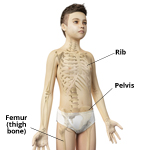
RMS may arise in any muscle in the body, but the most common sites for this tumor are:
- Adjacent to the base of the skull (parameningeal)
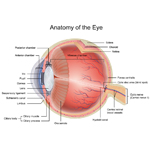
- Around the eye (orbital)
- Other sites in the head and neck, such as the nose and throat (nasopharngeal)
- Arms and legs (extremities)
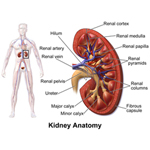
- Urinary system and reproductive sexual organs (GU, or genitourinary: includes bladder, vagina, prostate and paratesticular sites)
In children, there are two major subtypes of RMS based on the way the tumor cells look under the microscope (pathology).
Embryonal rhabdomyosarcoma (ERMS) is the most common type.
- ERMS tends to occur in younger children. Common sites include the area around the eye known as the orbit, around the head and neck, and the genitourinary system.
- ERMS often occurs in hollow organs that are lined with mucosa, such as the nasal passages, the vagina and the bladder, and appears as a grape-like mass on the surface. Tumors having this "botryoid" (grape-like) histology are a subtype of embryonal RMS.
Alveolar rhabdomyosarcoma (ARMS) makes up about 25-40% of RMS. This type is more commonly found in adolescents and often occurs on the arms and legs.
What causes RMS?
In most cases, there are no clear predisposing risk factors for the development of RMS. However, it has been associated with other conditions, including
- Neurofibromatosis type 1
- Beckwith-Wiedemann syndrome
- Li-Fraumeni syndrome
- Cardio-facio-cutaneous syndrome
- Costello syndrome
What are the symptoms of rhabdomyosarcoma?
Most often rhabdomyosarcoma presents as a mass, however the signs and symptoms depend on the location of the primary tumor.
- Genitourinary tumors may result in blood in the urine, difficulty urinating or bleeding from the vagina. They can also cause a mass next to the testicle in the scrotum, or in the vagina.
- Parameningeal tumors (tumors adjacent to the base of the skull) may cause facial asymmetry, difficulty breathing through or drainage from one nostril, ear discharge, headaches or facial pain. Swelling around the eye is common with tumors of the orbit.
- Extremity (arm and leg) tumors often present as a rapidly enlarging, firm lesion.
Prognostic factors
It is now possible to cure nearly 3 of every 4 children with rhabdomyosarcoma. Prognostic factors are characteristics of the patients and their tumors that are designated as more or less “favorable” based on the response to treatment and outcome of hundreds of patients treated over decades. These factors also are used to determine the best choice of therapy. Although the “unfavorable” forms require more intensive treatment than those considered “favorable,” all RMS are treated with chemotherapy and surgery; sometimes radiation therapy is added.
The most important prognostic factors include:
- Extent of the disease: This is defined by the Intergroup Rhabdomyosarcoma Study (IRS) Stage and Group systems.
- Primary tumor site: Some tumor sites are defined as favorable. These include tumors that begin in the orbit, the head and neck and the bladder. All other sites including parameningeal tumors and non-bladder genitourinary sites are classified as unfavorable.
- Histology subtype: Embryonal histology tumors have a more favorable outcome.
- Age: Patients under one and over 10 years of age have a somewhat less favorable prognosis.
- Presence of distant metastasis: Patients whose tumors have metastasized (spread to other areas) at the time of diagnosis have a less favorable prognosis.
William Meyer, MD, Univ. of Oklahoma Health Sciences Center
Reviewed by
CureSearch.org Medical Editorial Board
July 2008