MAKE A DONATION
Newsletter Email Subscribe
Please leave this field empty

newly diagnosed
In this overwhelming time, the best defense is information. Learning about a child’s specific cancer, its treatments and their side effects will help you prepare for the road ahead.
Parents and Families: Newly Diagnosed
Newly DiagnosedIn TreatmentAfter Treatment

Retinoblastoma

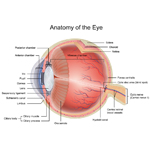
Retinoblastoma is a rare cancer, occurring in about one in 20,000 children. It originates in a part of the eye called the retina. The retina is a thin layer of nerve tissue that coats the back of the eye, which allows a person to see. Retinoblasts (immature cells of the retina) multiply during gestation and early life, to make enough cells to create the retina. As children age, the cells mature and are no longer able to divide and multiply, a process called differentiation.

 
View Illustration
 

Incidence

In 2008, about 300 children will be diagnosed with retinoblastoma in the United States. It occurs most often in children under 4, and makes up 2.8% of all cancers in children ages 0 to 14. The relative five-year survival rate for children with retinoblastoma is more than 90%.

What causes retinoblastoma?

We do not know what causes the immature retinoblasts to turn into cancer cells (a process called transformation), but we do know that in order for retinoblastoma to develop, there must be a change or mutation in both copies (one from each parent) of a gene called RB1. In most children with retinoblastoma (60%), this change occurs in only one cell, leading to a single tumor. If the change occurs in more than one cell, and if more than one tumor is detected (in one or both eyes) it means that a change had already occurred in one copy of the gene before conception. What precisely triggers this change or mutation is not known.

This leads to two very distinct disease types:

Genetic

The genetic form occurs in 40% of children affected by retinoblastoma. These children are born with the change in one copy of the RB1 gene in every cell in the body, including the cells in the retina. If the second copy of the gene undergoes a change, a retinoblastoma tumor can develop. Since every cell has the first copy of RB1 mutated, it is relatively easy for more than one cell to undergo a change in the second copy.

Most children (80%) with the genetic form do not have a parent with retinoblastoma, but the change in the gene occurred in either the egg or the sperm of one parent prior to conception. Even if the child has the genetic form, if neither parent has the tumor, the chance that retinoblastoma will occur in another child in the family is less than 1%. However, the risk of tumor in the offspring of a child with the genetic form of retinoblastoma is about 50%. Having the genetic form of the disease also increases a child’s risk of developing other cancers later in life.

Hallmarks of the genetic form include:

  • May have more than one tumor
  • Tumor often affects both eyes
  • May have tumors in other parts of the body
  • At increased risk for other cancers later in life

Non Hereditary

Most children with retinoblastoma (60%) do not have the genetic form; they are not born with the RB1 gene mutated in every cell of the body. They develop tumor in only one eye (unilateral) because both RB1 genes in a single retinoblast (immature cell) has undergone the mutation. We don’t know how or why this occurs. These children do not have an increased risk of developing other cancers, and their offspring have the same risk of developing retinoblastoma as other children in the population.

Signs and symptoms

Often, doctors find retinoblastoma on a routine well-baby exam. Most often, however, parents notice symptoms such as:

  • A pupil that looks white or red instead of the usual black
  • A crossed eye (looking either toward the nose or toward the ear)
  • Poor vision
  • A red, painful eye
  • An enlarged pupil
  • Differently colored irises
Anna Meadows, MD, Children's Hospital of Philadelphia
 
July 2008